Total Pageviews

Sunday, July 29, 2018

Barandi's Nevada Days (2018)

Here I am again, in Reno, thanks to a grant given by USAC.
I am going to spend this summer here, doing some research and visiting old friends.

Picture-bertsos / Bertso-argazkiak

The pictures are going to be an excuse to compose some bertsos, which I will call picture-bertsos,  bertso-argazkiak.
On my way to USA I had to take the plane in Madrid and there I took some pictures.


Renoko bidean
nabil ni herabe
Madrildik abitzea
omen dugu lege
Espainian ele anitz
badira, halere
elebakartasuna
hemen da errege.


Kalean gora kalean behera
ta hemen gelditu seko
erakunde baten egoitza da
egiari omentzeko
leoiak eta dotorezia
aurreko eta atzeko
parlamentua ei da leku bat
danok alkar ulertzeko
esaldi hura arrotza barik
bihurtu bedi etxeko.

usac reno images bilaketarekin bat datozen irudiak

Today the crew of USAC and some visitors from different universities (University of the Basque Country, Rey Juan Carlos University...) have gathered to have a barbecue at Idlewild Park which is about one mile from Down Town Reno. Good atmosphere, good company, and good food&drinks.


Gaur, uztailak 29, Renoko euskal diasporako bi ordezkari bikainekin izateko parada izan dut: Joxe Mallea historialari eta Jesus Goñi bertsolari nafarrarekin... Badira 50 urte baino gehiago hará joan zirela. Jesus bertsotan aritzeko ere xaxatu egin dugu. 


Joxe Mallea eta
Jesus Goñi artzaia
bazkalkide izan ditut
izanik garaia
ta bertsotan Goñiri
jarri nion gaia
segituan kantatzeko
hark zuen kuraia
Euskal Herriak hemen
badauka sustraia.

The following Saturday Jesús Goñi invited me to Gardnerville and he told me many stories. There he was encouraged to sing some improvised bertsos, recalling the many times he has sung bertsos in JT, the Basque restaurant of Gardnerville.


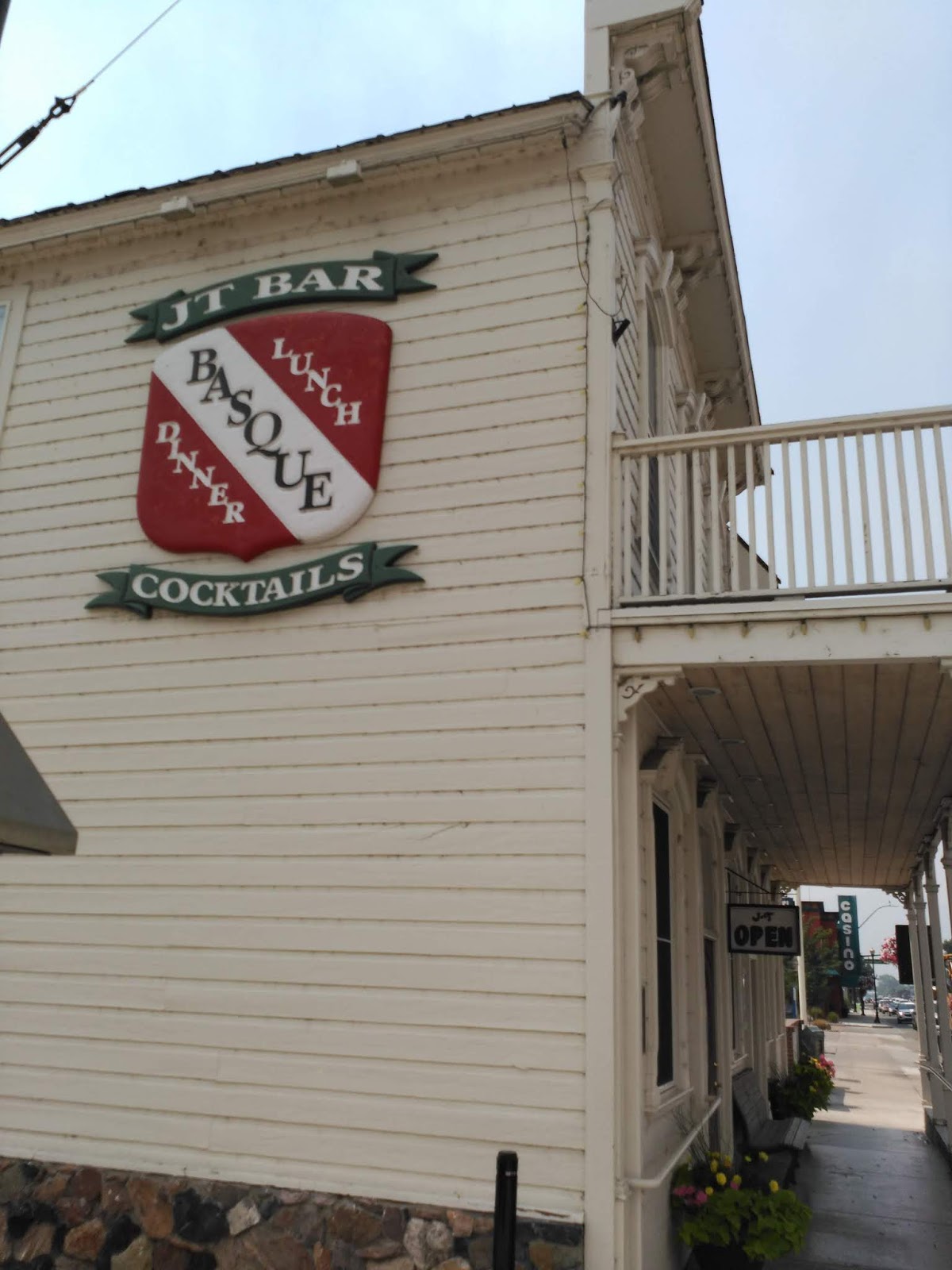

On the way back I also tempted Goñi with a kopla, which had its response.


But this is the usual landscape that I enjoy every day. I want to finish a publication in Euskera about America in Basque literature. I also want to start an anthology of multilingual literary texts that were published in the Rein de Navarra. I want to prepare two communications (one on bertsolaritza and the other on literature or on polysystems) for two Conferences... I want too many things, hahaha! But I am making progress... I guess.


CBSn edo Euskal Zentroan
beti hasten dut eguna
lan egiteko ta ikertzeko
txoko bat goxo-lehuna
Euskal Herritik datozenentzat
ikerlarien laguna
ea oraingoan bukatzen dugun
bukatu behar duguna.


The next weekend we had to go to the Basque picnic in Gardnerville, where we met with illustrious people. From Reno we have gone Iñigo Medina, Iñaki Arrieta and the three. There we met Jean Flesher, from Salt Lake City, Utah. Cook, entrepreneur and musician: he sings in the Amerikanuak group. And above all, euskaldun: he speaks a very nice Basque, baxenafarra.

Hona hemen bere taldaren argazkia/ Here a band's picture:
amerikanuak band bilaketarekin bat datozen irudiak


And here two sons of Esterenzubi (Lower Navarre), Mattin Etchamendi and Jonhy Kurutxet. The two came to work as shepherds and one lives with his family in a ranch and the other is one of the 4 bertsolaris of the United States and lives in San Francisco, after having started a gardening company.
Mattin Etchamendi is the author of Urrunemo Mendebalean artzain, a wonderful book, in which he tells of his life as an emigrant, a sheperd in the American West. He is a great singer and I recorded one of the bertsos composed by him for the Basque picnics in the USA.


Euskaltasuna zaintzeak hemen
zinez badu meritua
hainbat euskaldun paraje hontan
artzaintzan da aritua
hostalaritzan euskal jendea
ere bada aditua
Gardneville da Euskal Herri bat
Nevadan sustraitua.


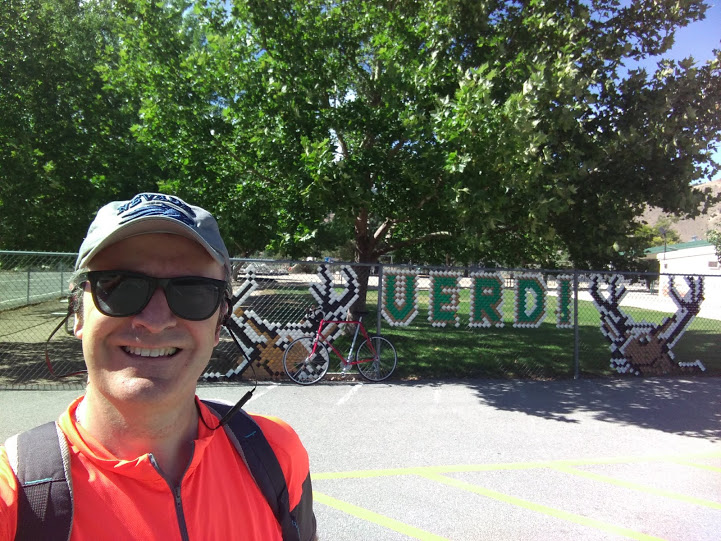
From north Virginia street to Verdi, a town in Washoe County on varied roads: sometimes it was a bike lane, sometimes a lane on the road, sometimes it was along the side of the road. 22 miles in total: not too much but enough to keep in shape.

 Crossing Truckee River...

With Big Foot, my old friend from Verdi.

Bizikleta ta biok
berriro hemen gu
ohitura osasuntsuak 
beharko mantendu
Verdi-ra nire lema
egin dut zuzendu
Big Foot lagun zaharrak
hemen segitzen du.


In the mornings, on my way to the UNR, I was surprised by an exhibition of classic cars in the downtown of Reno. Spectacular.

 Back to the ordinary tasks during the week.


The next week I also made a trip on the bike to Verdi.


With some colleagues from Madrid coming from Rey Juan Carlos University. We did not run into too much, but we could be at a dinner and I could tell you something about the Basque heritage of the state of Nevada.


Joxe Mallea, who lived in Elko for several years, and who has a tight bound with that town and its people, suggested that I spend a weekend visiting it.
Of course, I accepted the offer and there we were able to visit the Basque restaurants (Star Hotel and Toki ona), the Basque house, and the emblematic places in which the Basques had a lot to do.
On Sunday we went to walk through the Ruby Mountains, where the Basques were also very present, because they were dedicated to herding flocks of sheep the summers

Elko Euzkalduak Club. Now they have an interesting venue, just outside of Elko. On the facade, the American flag and the ikurriña.


Reno aldetik sortalderantza
barrena ilusioz betia
Joxegaz Elko bisitatzea
da gure asmo amestia
han jatetxeak topatu doguz
ta euskal jende irekia
hara non dogun Nevada aldeko
gure Euskal Herri txikia.


After hearing mass in the parish of Saint Joseph of Elko, when Joxe and me left  we both met Ana Mari Ozamiz, from Arteaga (Bizkaia). In the license plate of his car, it says "Amuma" ... She is an authentic amuma. Dozens of years teaching Basque dances in Elko. 83 years old. She speaks beautiful Basque. Joxe was a priest in that same parish between 1967 and 1971.


_ _ _ _ _ _ _ _ _ _ _ _  _ _  _

The academic life of the CBS has resumed the rhythm with the Doctoral Dissertation of Ziortza Gandarias on August 29. This was my short commentary on Facebook: 
"Today has been the doctoral dissertation of Ziortza Gandarias (galdakaoztarra, from Galdakao) in the Center for Basque Studies. Intense day The dissertation was about Jokin Zaitegi and his contribution to the Basque culture through the Euzko-Gogoa magazine. So interesting. A brilliant dissertation that has deserved a cum laude unanimously. Zorionak to the new doctor who deserves it. After we have posed with her and her husband Josu Zubizarreta, a great guy from Boise. To end the day we celebrated the event at Little Waldorf on N Virginia street: very good atmosphere."


Ziortza bere Distertazioan
hasi jakun erakusten
utopia bat herritik kanpo
nola berriro dan hasten
galdakaoztarrak kontu guztiok
ondotxo zekien josten
Eusko gogo bat txikia gugan
ikusi dugu berpizten. 


Portola (NV) is a place that I did not know and near that town, there are vestiges of the presence of Basque shepherds. Joxe Mallea once again, generously, took me to see that area where we found a sheep camp that was managed by Basque shepherds. There a country oven has been restored by Joxe with the help of the US Forest Service.


Later, Joxe and I visited Lake Davis, beautiful, where more than one Basque has taken a dip.


September 1st:
Today has been a busy day. In the morning in Gardnerville interviewing a Navarrese inmigrant in Nevada: Jesus Rey, from the Erro Valley (Bizkarreta), about Navarrese immigrants in Nevada and California. A great guy, Jesus Rey: he came when he was 17 years old and ended up running a Basque restaurant for 29 years (with a Navarrese partner too): Country Club Restaurant. Thanks to this, their children have prospered in the new continent.


Erro aldetik ta hamazazpi
urterekin etorrita
Jesus Rey dauka izena eta
ez du egiten zarata
Gardnevillen da bere etxea
hemen familia dauka ta
hainbat urtetan lan einda gero
hemen sustraiak botata. 

In the afternoon, Sandra Ott, a wonderful university professor from the CBS, hosted a reception at her home in Galena Forest (NV). We have gone back to celebrate the doctoral thesis of Mrs. Gandarias and the small "academic" community of Reno has tightened their ties. Family Picture 


From time to time I make some "getaway" to visit some friends who are in the south of San Francisco, in an area called Menlo Park. From the Bay Bridge, you can see San Francisco's skyline in the fog.



On Monday (September 3) was Labor Day in the United States and the Haritz Azurmendi (from Albistur, Gizpuzkoa) and we both went to Lake Tahoe (a bath in crystal clear waters), we had lunch there and from there to Virginia City; now it is a tourist city but that It was very populated during the 19th century by the gold mines it housed.


In this last week I had to do a little sprint with the publications and with the interviews.
On Thursday, interviewing Mary Lou Urrutia, daughter of an immigrant from the Erro Valley (Navarra). An excellent person very involved in the activities of the Basque Diaspora.
We were in Louis Basque Corner and Luis Zabalegi himself (from Lerga, Navarra), owner of the place, joined us. Great guy.


Starting the day at 6 am at Espinal's house (outside of Reno) celebrating the Diaspora Eguna with balloons in the background. What great people! Gina Espinal is the daughter of immigrants from the Erro Valley (Navarra).


With Gina Espinal...


Then we had the event organized by the CBS to celebrate the day of the Basque Diaspora. We have departed from Rancho San Rafael, we have passed through the park and there are an oven and a wagon of Basque shepherds who worked in Nevada. There are also some explanatory panels. Many has explained how they brought that furnace by truck and how they restored it. Then we went to the statue of the Basque Shepherd (made by N. Basterretxea). On the way back some pizzas (in Pub n 'Sub) have ended the celebration.


Batzuk gogoan besteak ahaztuta
latza denboran aizkora
Euskal Herritik urrundu ziren
ta pasatu da denbora
haien bihotzan sorterria da
kokatua hantxe gora
euskaldun danok goratu daigun
geure Euskal Diaspora.


Hona etortzeko aukerak berak 
sortua zidan algara
USACek eman zidan bekakin
jin nintzen Amerikara
euskaldunekin beti egotea
da itzelezko gozada
badira beste leku bikanak 
baina ezin dira konpara
eskerrik asko, Reno maitea
eskerrik asko, Nevada.


Tuesday, July 03, 2018

Eusko Ikaskuntza Nafarroan: katea ez da eten

Diario de Noticias-en atera zidaten artikulua.
Argazkia ere jarri zidaten:


Hona hemen artikulua.

El centenario de Eusko Ikaskuntza - Sociedad de Estudios Vascos lo tenemos a la vuelta de la esquina y, desde Navarra, es el momento de echar una mirada atrás para ver con más conocimiento de causa a dónde queremos ir. En la sede de Eusko Ikaskuntza de Pamplona un busto de Arturo Campión (1854-1937) que preside la sala de reuniones nos recuerda que parece que fue ayer cuando tanto él como otros representantes navarros formaron parte fundacional en aquel 1918 de Eusko Ikaskuntza, a instancia de las cuatro diputaciones forales (de Bizkaia, Gipuzkoa, Araba y Navarra). En las juntas directivas iniciales, antes de la Guerra Civil, además de Arturo Campión, se contó con representantes navarros que dejaron impronta: Manuel Irujo (1891-1981), Aingeru Irigaray (1899-1983), José Aguerre (1889-1962) o Joaquín Beunza (1872-1936), personas de distinta trayectoria intelectual e ideológica, pero que coincidían con la necesidad de apoyar el estudio riguroso y académico en Vasconia y sobre Vasconia, cosa que por aquellos albores del siglo XX no se veía siempre con buenos ojos y no pocas veces era censurado. Pero, y siguiendo con esos comienzos, creo que es significativo rescatar de la memoria el II congreso de Eusko Ikaskuntza que se celebró en Pamplona en 1920. El congreso giró en torno a la “Enseñanza y cuestiones económico-sociales”. Es significativo por varios aspectos: ya desde el principio la capital navarra acoge la actividad de Eusko Ikaskuntza;la mujer empieza a participar en los congresos de Eusko Ikaskuntza con aportaciones académicas;participan representantes municipales de la Baja Navarra;el discurso inaugural es pronunciado por Arturo Campión y el de clausura por el rey Alfonso XIII. Para entonces este rey ya había pronunciado un discurso sobre los estudios vascos: “Veo con singular complacencia la creación de la Sociedad de Estudios Vascos, y quiero que el primer aplauso que reciba esta Sociedad naciente sea el mío, como deseo ser el primero que se inscriba entre sus fundadores, consagrados al estudio y fomento de todo cuanto pueda contribuir al adelanto y progreso del País;cultivad vuestra lengua, el milenario y venerable euskera, joya preciadísima del tesoro de la humanidad, que habéis recibido de vuestros padres y debéis legar, incólume a vuestros hijos […]”. Dan mucho qué pensar estas declaraciones porque a veces contrastan con actitudes de representantes estatales o del País con respecto a Vasconia, su cultura y los estudios sobre ella

Tras la Guerra Civil y el “obligado” cese de actividad en territorio peninsular, Eusko Ikaskuntza se pone en marcha de nuevo en Oñati en 1978 y en esa reanudación están presentes, una vez más, destacados representantes navarros: entre otros, Gregorio Monreal, quien sería después presidente de Eusko Ikaskuntza y más tarde rector de la Universidad del País Vasco. La “renovada” institución tendría desde entonces varios vicepresidentes en la junta permanente, uno por cada territorio. En representación de Navarra, Tomás Urzainqui, Mikel Aranburu Urtasun, Sixto Jimenez, personas con gran proyección en el tejido social y cultural de Navarra, me han precedido como vicepresidentes por Navarra y han dejado el listón muy alto, en su aportación a Eusko Ikaskuntza y a los estudios vascos en general. En Navarra, además, Eusko Ikaskuntza ha sido un foro en donde han confluido aportaciones de estudiosos de las distintas universidades navarras y de otros estamentos, creándose un espacio de pluralidad y diálogo sereno y fecundo en beneficio de Navarra y sus gentes.
En la etapa que me ha tocado como responsable por Navarra, Eusko Ikaskuntza se ha repensado a sí misma, se ha reformado en sus estatutos y se ha transformado en su actividad para adecuarse a los nuevos tiempos y hacer frente a los retos de la sociedad actual. En cuanto a Navarra, Eusko Ikaskuntza ha recuperado el convenio con el Gobierno de Navarra con una partida para proyectos y actividades en Navarra que partió de cero y el año pasado era de veinte mil euros y este de cuarenta mil. Los convenios que tenemos con los ayuntamientos navarros están siendo actualizados para las nuevas líneas de actuación de Eusko Ikaskuntza y la respuesta está siendo muy positiva. Eusko Ikaskuntza ha contado siempre una trabajadora, al menos, de origen navarro que ha gestionado con eficacia la actividad concerniente a nuestro territorio.

Dentro de las cinco líneas de actuación de Eusko Ikaskuntza, la “realidad socio-cultural” es la que tendrá en Pamplona un hito importante porque en el XVIII congreso de Eusko Ikaskuntza (Geroa Elkar-Ekin) con motivo de su centenario tendrá en la capital navarra su sede. En los distintos foros preparativos y previos al congreso se ha observado una dinámica participativa importante, que no tendrá su término en el congreso, sino que se espera continúe. El mismo XVIII congreso será una herramienta y punto de partida para seguir trabajando y aportando ideas, proyectos y soluciones para la coherencia y bienestar del País, pues para eso nació Eusko Ikaskuntza hace 100 años: “katea ez da eten”, la continuidad no se ha roto y como dijo el bertsolari Xenpear, “jaikoko dira berriak, gu gara Euskal Herriak”.Vicepresidente de Eusko Ikaskuntza

Sunday, July 01, 2018

Mindfulness delakoa lanabes kristaua izan daiteke

Azkenaldion "Mindfulness" delakoa modan ari da jartzen. Meditaziotzat jotzen da, berez, kristau meditazioa ez izan arren. Baina, teknika huts bezala, lagungarria izan daiteke zenbait kontutarako. Berez, teknika hori kristauon artean erabilia izan da mendetan zehar, eta aszetikan presente izan da nola edo hala. Rosie Herreid-ek artikulu bat idatzi du Aleteian eta hona ekartzea erabaki dugu.

Hona izenburua:

How to use mindfulness to fight temptation

Eta web-gunea: https://aleteia.org/2018/06/29/how-to-use-mindfulness-to-fight-temptation/?utm_campaign=english_page&utm_medium=aleteia_en&utm_source=Facebook#Echobox=1530299433
Erlazionatutako irudia

Use it as a tool, along with your prayer, to improve your mental and spiritual health.

Catholics can be wary of “mindfulness,” which they many equate with new-agey Eastern-style meditation. While some kinds of meditation may be harmful to your faith, mindfulness isn’t meditation. Rather, it’s just a tool that can be used to improve your mental health and even benefit your faith.
In therapy I learned that mindfulness is a way of observing the thoughts and emotions that pass through your head — observing, but not judging. The goal is to be aware of the feelings and ideas that rush through your head, observe them, and let them go, instead of dwelling on them and succumbing to the harmful ones. Your thoughts and actions form a cycle: thoughts and feelings give rise to actions, and actions in turn cause feelings. By noticing our thoughts and feelings and preventing them from influencing our actions, we can step in and interrupt this cycle.
For example, if I’m paying attention to the thoughts in my head, I might notice feelings of shame and anger, or even fully-formed thoughts like “I can’t do this” or “I hate my life.” Before, I might have let these affect my mood. But when I am mindful of the causes of my mood, I can deliberately choose to ignore them. I will say to myself, “I feel angry right now. I feel angry at my life.” But I will refuse to let the anger take me over. This is easier said than done, of course; but recognizing the beginnings of your mood is a powerful first step.
Aside from recognizing and dismissing our thoughts and emotions, the practice of mindfulness also includes awareness without judgment. For example, if I feel resentment, and I think something like “my husband’s never here when I need him,” I don’t have to let this emotion turn into action. I don’t have to act on my resentment by yelling at my husband or acting spitefully toward him. I can just acknowledge the fact that I feel resentful, and do my best to speak up about it and/or to let it go without blame or guilt. This is enormously helpful for mental scruples: just because I have bad thoughts doesn’t mean I’m a bad person.
This distinction between feeling an emotion and dwelling on it or acting on it reminded me immediately of an old Catholic phrase: “entertaining” a temptation. Like a thought or an emotion, a temptation can come into our head unbidden. We’re not responsible for never having temptations; we’re only responsible for pushing them away when they come into our heads. If Jesus himself experienced temptation, it can’t be sinful to be tempted; it only becomes sinful when we “entertain” the temptation, invite it in and focus on it.
As a Catholic first and a practicer of mindfulness second, I was struck by the similarity between the two ideas. If I wanted to strengthen my defense against temptation, maybe mindfulness could be a helpful tactic.
Temptation often catches us unaware. By the time we notice that we’re being tempted, we’ve already given into the temptation and allowed sin to influence our thoughts and actions. Being in the habit of being aware of your thoughts, or at least taking time to slow down and observe yourself when you’re feeling emotional, can help you nip temptation in the bud. This isn’t limited to staying calm and letting the temptation float peacefully out of your head; a strong temptation can be countered strongly. I know people who yell at the devil and tell him to get out of their lives. My favorite technique is to remind myself, “I don’t have to be a slave to my emotions!” I don’t have to give in to spiritually dangerous feelings like hatred, envy, or lust, just as I don’t have to give in to psychologically dangerous feelings like self-hatred, despair, or anxiety.
The techniques I learned for slowing my mind down and focusing on my thoughts and feelings can also be applied to fighting temptation. When I need to stop the flurry of thoughts and tune into my mind, I sometimes try little games like “find everything blue in this room” or “describe everything your five senses are feeling right now” or “how many types of vegetables can you name?” Giving your mind something direct to focus on, and sweeping away all the intrusive thoughts that come barging in, helps you to regain control.
It’s the same way with sin. Distraction can go a long way in fighting temptation. If you can use mindfulness to slow down and be aware of what’s going on in your head, you can stop temptations and negative thoughts before they cause harmful actions. You can interrupt the vicious cycle and free your soul.

Friday, June 22, 2018

And God Created Woman


Istorio polita, eta eduki antropologiko eta teologiko interesgarriduna. Umorea, gainera, ez zaio falta. 

eve created images bilaketarekin bat datozen irudiak

When God created woman he was working late on the 6th day.......
An angel came by and asked." Why spend so much time on her?"
The lord answered. "Have you seen all the specifications I have to meet to shape her?"
She must function on all kinds of situations,
She must be able to embrace several kids at the same time,
Have a hug that can heal anything from a bruised knee to a broken heart,
She must do all this with only two hands,"She cures herself when sick and can work 18 hours a day"
THE ANGEL was impressed "Just two hands.....impossible!
And this is the standard model?"
The Angel came closer and touched the woman
"But you have made her so soft, Lord".
"She is soft", said the Lord,
"But I have made her strong. You can't imagine what she can endure and overcome."
"Can she think?" The Angel asked...
The Lord answered. "Not only can she think, she can reason and negotiate."
The Angel touched her cheeks....
"Lord, it seems this creation is leaking! You have put too many burdens on her"
"She is not leaking...it is a tear" The Lord corrected the Angel…
"What's it for?" Asked the Angel..... .
The Lord said. "Tears are her way of expressing her grief, her doubts, her love, her loneliness, her suffering and her pride."...
This made a big impression on the Angel,
"Lord, you are a genius. You thought of everything.
A woman is indeed marvellous"
Lord said."Indeed she is.
She has strength that amazes a man.
She can handle trouble and carry heavy burdens.
She holds happiness, love and opinions.
She smiles when she feels like screaming.
She sings when she feels like crying, cries when happy and laughs when afraid.
She fights for what she believes in.
Her love is unconditional.
Her heart is broken when a next-of-kin or a friend dies but she finds strength to get on with life"
The Angel asked: "So she is a perfect being?"
The lord replied: "No. She has just one drawback
She often forgets what she is worth."
-author unknown

Wednesday, June 20, 2018

Euskal-Marokiar kantu inprobisatuaren saioa Kondestablen

Ekainaren 11an izan zen, ICS (Instituto de Ciencias Sociales / Giza Zientzien Institutoa) delakoak bultzatuta, Bertsozaleen elkartearen laguntzarekin. Inprobisazio saioa neuri aurkeztea egokitu zitzaidan.

Euskal-Marokiar kantu inprobisatuaren saioa Kondestablen bilaketarekin bat datozen irudiak


Maialen Lujanbiok eta Latifa Laaroussia ayllus kantaerako inprobisatzaileak emanaldia eskaini dute Iruñean. Euskarazko bertsogintza eta arabierazkoa alderatzen ari da Errusiako ikerlari bat.

Hona hemen Eitb-k atera zuen bideoa.

Eta ekitaldia argitaratzeko euskaraz ateratako testua:

Astelehenean, ekainak 11, Maialen Lujanbiok eta Latifa Laaroussia ayllus kantu inprobisatuko artistak emanaldia eskainiko dute Kondestable jauregian, Iruñean. Mahai-ingurua izango da lehenago, bi sortzaileokin eta gaian aditu diren ikertzaileekin, Asier Barandiaranekin eta Sarali Ginstburgekin.
Mintzola Ahozko Lantegiak azaldu duenez, arabiera-gaztelania eta euskara-gaztelania itzulpen zerbitzua izango da.
Egungo bertsolari txapelduna Latifa Laaroussiarekin arituko da kantuan. Xauen Marokoko herrian jaio zen Laaroussia, eta, aitaren debekuaren ondorioz, jendaurrean kantuan egiteko bere ametsa egia bihurtzeko pixka bat itxaron behar izan zuen, umetatik kanturako zaletasuna zuen arren.

Eta gaztelaniaz ateratako testua:

El lunes, 11 de junio, Maialen Lujanbio y la improvisadora de música ayllu Latifa Laaroussia ofrecerán un recital en Civivox Condestable, en Pamplona. Antes de la actuación, habrá una mesa redondo en la que participarán ambas creadoras junto a los expertos Asier Barandiaran y Sarali Ginstburg.
Como han explicado desde Mintzola Ahozko Lantegia, el acto contará con servicio de traducción simultánea.
La campeona Maialen Lujanbio cantará junto a Latifa Laaroussia. Nacida en la población marroquí de Chechauen, Laaroussia tuvo que esperar hasta ver cumplido su sueño de cantar ante el público a pesar de que desde pequeña le apasionaba el canto, debido a la prohibición de su padre.


Saioa biziki interesgarria izan zen eta ederki aritu ziren bai Maialen bai Latifa.

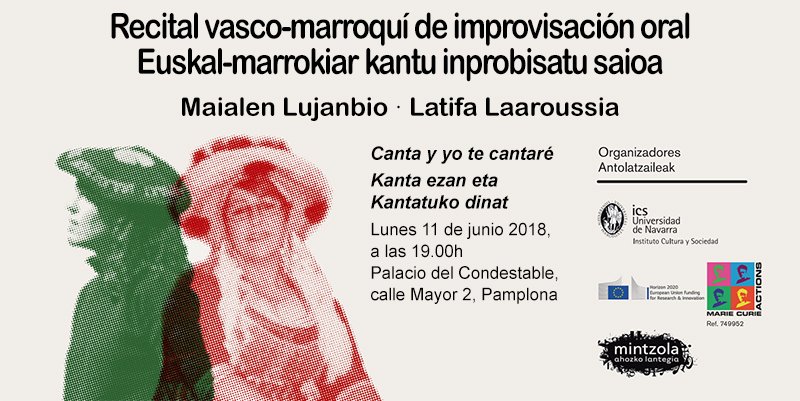
Hauxe da atera zen afitxa edo kartela:

 El @gob_na declara el #bertsolarismo bien de interés cultural inmaterial 👉http://ow.ly/qahG30kmBBn  ¿Quieres conocer un poco más sobre esta tradición o simplemente celebrarlo? ¡No te pierdas este lunes 11 el recital poético organizado por el @ICS_unav y @Mintzola!


Hau ere atera dute Nafarroako Unibertsitatekoek. 


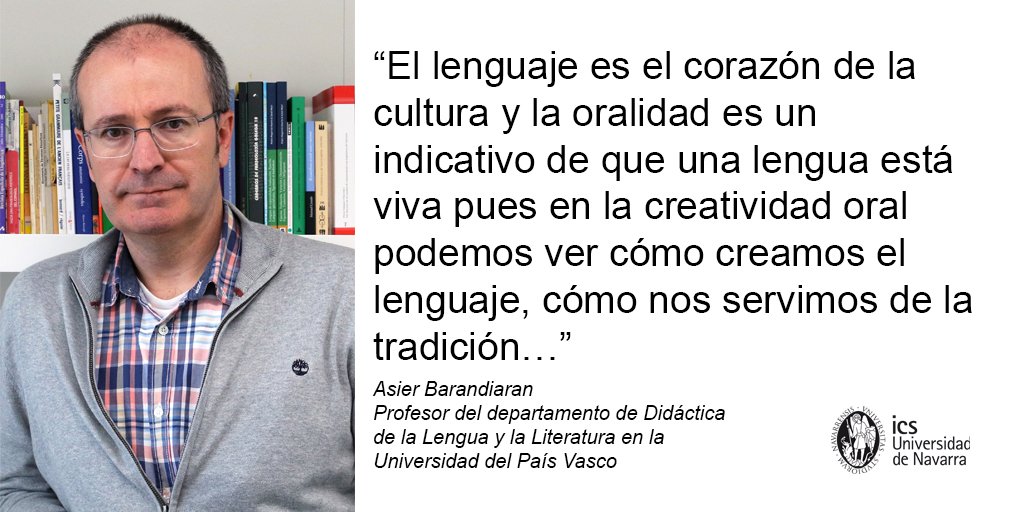
Asier Barandiarán, experto en #bertsolarismo, de  @upvehu, colabora con un proyecto de investigación del ICS sobre #creatividad y #lenguaje oral 👉 http://ow.ly/NGy030jNg4X Nafarroako Bertsozale Elkartea erabiltzailearen argazkia.

Wednesday, April 25, 2018

Egile nafarren euskal literaturaren antologia. Lehenengo alea aurkeztu da

Azkenean egin dugu Egile nafarren euskal literaturaren antologia.

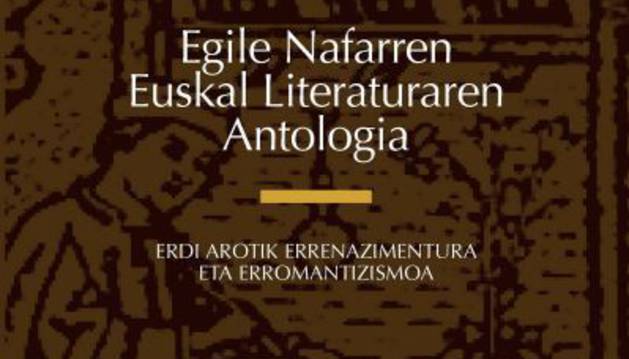
Portada del primer ejemplar de la colección 'Egile Nafarren Euskal Literaturaren Antologia'.

Komunikabideetan oihartzuna somatu da.
Diario de Navarra izan zen lehenengoetakoa notizia bere atari digitalean jartzen. Hona hemen testua:

El Gobierno de Navarra ha editado la primera antología de autores navarros en euskera en la que se han recogido los fragmentos más significativos desde el inicio de la literatura vasca hasta 1900. El volumen es el primero de una colección de antologías que llegarán a la producción literaria actual.
Cuatro especialistas en literatura vasca: Asier Barandiaran, Iratxe Esparza, Sho Hagio y Javier Rojo han trazado un recorrido literario desde sus inicios al final de la Edad Media, con Bernat Etxepare, pasando por el Renacimiento con Pedro 'Axular' hasta finalizar la recopilación con el Romanticismo de Arturo Campión o Franzisko Laphitz, entre otros. El primer ejemplar de la colección Egile Nafarren Euskal Literaturaren Antologia se titula 'Erdi arotik errenazimentura eta erromantizismoa'.
El objetivo de la antología es "dar a conocer la literatura vasca primitiva" recopilando "lo mejor de su producción desde su origen hasta el año 1900", ha explicado en un comunicado el Gobierno de Navarra.
Los autores de la antología, además de escoger los textos, "han aportado pinceladas significativas sobre los escritores y sus obras, para que el lector actual comprenda y conozca mejor la aportación de los autores navarros".
Con vocación de continuidad, la antología es la primera de otras tres que llegarán a los autores y autoras actuales.
AUTORES DE LA RECOPILACIÓN
Asier Barandiaran es filólogo en lengua vasca y nació en Galdakao (Bizkaia) en 1970. Residente en Navarra desde 1995, se doctora en la Universidad del País Vasco en 2003, centro del que es profesor en la Facultad de Educación y Deporte. Anteriormente impartió clases den la Universidad de Navarra. Ha publicado varios trabajos sobre retórica en torno a la literatura vasca oral, y ha realizado también críticas y análisis literarios sobre la literatura vasca y el periodismo en euskera. Recientemente ha centrado su atención en la literatura vasca de Navarra.
Iratxe Esparza (Santurtzi, 1972) es licenciada en Filología Vasca y doctora enEstudios Literarios y en Literatura Comparada por la Universidad del País Vasco. Tras una estancia en la Universidad de La Plata, presenta su tesis doctoral, en la que analiza la transformación de la identidad y las distintas manifestaciones del sujeto posmoderno de la narrativa vasca del siglo XXI. Además de escribir trabajos sobre distintos aspectos de la literatura vasca para revistas y libros, complementa su trayectoria como investigadora a través de la participación en distintos cursos y congresos. Actualmente forma parte del grupo de investigación LAIDA (Literatura e Identidad), es crítica literaria en la prensa y profesora en la Universidad del País Vasco, en el Departamento de Didáctica de la Lengua y la Literatura en la Escuela Universitaria de Magisterio de Bilbao.
Sho Hagio (Kurume, Japón, 1962), este sociólogo japonés es desde 2016 profesor titular de la asignatura Global Basque Studies en la universidad Tokyo University of Foreign Studies. Con la sociología de la lengua como objeto de estudio principal, actualmente profundiza, entre otros, en el estudio del renacimiento del euskera. Ha escrito varios artículos, entre ellos 'External Projection of the Basque Language and Culture' (BOGA, vol. 1, ed. 1, 2013). Además, tradujo al japonés la obra de Bernat Etxepare 'Linguae Vasconum Primitiae' y la publicó en Tokio en 2014.


Javier Rojo Cobo es doctor en Filología Vasca (2004) y profesor de la Universidad del País Vasco, en el Departamento de Didáctica de la Lengua y la Literatura, en el campus de Leioa. Forma parte del grupo de investigación LAIDA (Literatura e Identidad), y ha publicado algunos trabajos en el ámbito de la historia de la literatura y de la crítica literaria en revistas y publicaciones colectivas. En las últimas décadas, además de trabajar en publicaciones académicas, ha realizado también un prolijo trabajo en periódicos, revistas y en publicaciones divulgativas periódicas.

Diario de Noticias de Navarra-k re notizia nahiko txukun atera zuen:
iruñea - Nafarroako Gobernuak egile nafarrak biltzen dituen euskal literaturaren antologiaren lehenengo alea argitaratu berri du. Asier Barandiaran (Galdakao, 1970) filologoak koordinatuta, Erdi Arotik 1900 urtera arteko egileen lan esanguratsuenak bildu dira, aro garaikideraino iristea helburu izango duen antologiako lehenengo atal honetan. Hala, Bernat Etxeparerekin hasi eta Franzisko Laphitzen testuekin borobiltzen da atzo Iruñean aurkeztu zuten lana, tartean Pedro Agerre Axular, Joakin Lizarraga edo Arturo Campion bezalako izen handiak atzendu gabe.
“Guztiz beharrezkoa” zen proiektu honek jarraipena izango duela azpimarratu zuen atzo Barandiaranek. Liburukiaren sarreran aditzera ematen duen bezala, “egile nafarrek egin duten euskarazko literatura euskal literatura osoaren parte bat izan da, eta da. Parte horrek zer nolako pisua edo balioa daukan antzemateko itxaropenarekin jaio da antologia hau, edo gutxienez horretan baliagarria izateko”.
Antologiaren lehen zati hau osatu duten idazle eta lanak aukera-tzerakoan, “ezinbesteko sailkapen lana” egin dela ere adierazi zuen koordinatzaileak. “Izan ere, aukeraketa prozesu bat egon da, baina tarte historiko honetan agertu beharreko egile guztiak egon, badaude. Irizpideen artean, bat oso argi geneukan hasieratik, ez genuen horretan zalantzarik izan: Nafarroa Behereko egileak sartzea”. Izan ere, Nafarroako egileen antologia bat osatzerakoan eta testuinguru historikoa medio, “kontutan hartu beharreko” egileak direla azpimarratu zuen Barandiaranek.


Gerora, Diario de Navarra-n berriro ere, Nerea Alejos kazetariak landuta, beste artikulu bat atera zen euskaraz, "Nafar hizkuntza" delako atalean. Eskerrik asko Nereari bere lan txukunagatik, besteak beste, Laida Ikerketa Taldearen aipamena ere egin zuelako. 


Eta Gara egunkarian ere atera ninduten (hemen, 2018-05-28):


Eta Xaloa telebistan egin zidaten elkarrizketa:
https://www.youtube.com/watch?v=eLXNHq9Plyk&t=200s